Preamble Drivel
I was listening to the Writing Excuses podcast 11:09 - Q&A on the Element of Wonder and a listener/viewer asked a very interesting question: are there stages to wonder, like the "stages of grief"?And it seemed, to me, that the answers were not adequete to the question.
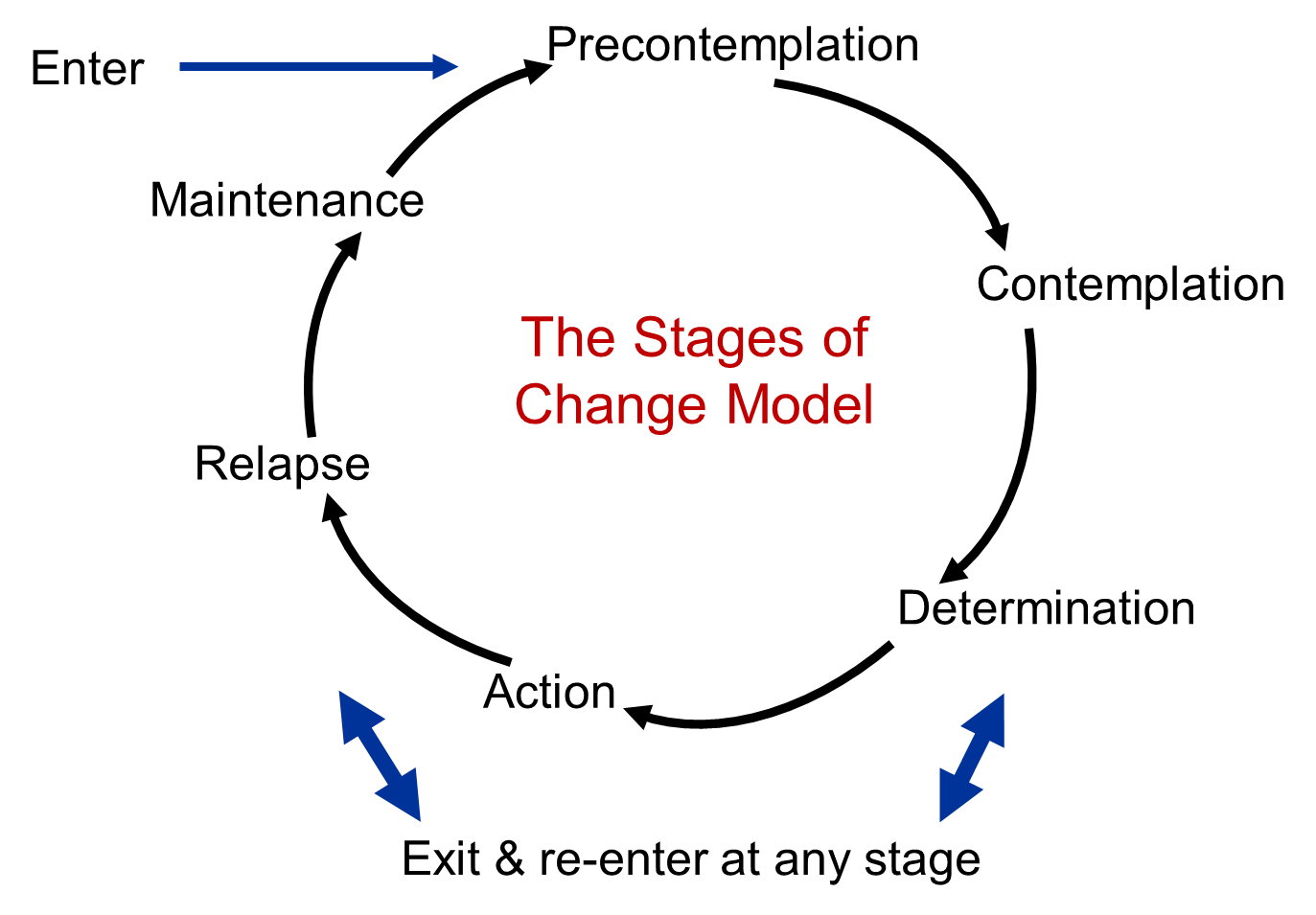
In this post I take a shot at filling that insufficiency a bit. Let me prephase that by saying that the stages of grief have been debunked, insofar as the theory addresses a "progression" and a well defined road to recovery. People experience things in as many ways as there are people. Michael Shermer writes,
Stages are stories that may be true for the storyteller, but that does not make them valid for the narrative known as science.This is written from the perspective of a storyteller.
 |
| http://sphweb.bumc.bu.edu/otlt/MPH-Modules/SB/BehavioralChangeTheories/BehavioralChangeTheories6.html |
The Context
The purpose of writing fiction: to hack into the reader's perception and make them see visions. To put a voice inside someone else's head, and to have them respond to that voice. With emotion, with thought. To become a part of the reader's wetware.Immersion, tone, setting, page layout, plot, character, worldbuilding, font, pacing...all of these are tools used to do the hacking. Some of the tools do double-duty as the vision itself--the plot, the characters, the setting.
Wonder is the reader's response. And it is something different from grief, or lust, or terror in that it is not a response of reptillian emotion, but a signal of a change in the reader's perception-filter. "Whoa", "mind blown", "awesome".
A written thing reaches inside of us and drags our minds into a wide open state.
Curiosity, a sense of our place in the universe, delight--these mini-states that bridge thought and emotion and perception--arise out of that "sense of wonder", that wide open state.

The "Stages" of Wonder--the Anatomy of Wonder
We need a "Thing", that which evokes wonder--the provocation. The Ringword, Wizards and Witches, the Grand Canyon, a lightning bolt of true love...We need a "she", the one who experiences the Thing, and therefore wonder. Let's start by assuming this "she" is our character.
Stage 1: Silence
The introduction of the thing momentarily halts all other thoughts. Sometimes even autonomous processes-- "she stopped breathing". The incessant drone of worries--the bills, the bad guy chasing her, the magic she needs to be able to control. The quiet murmur of her second and third thoughts--am I good enough, is this right, will I find love.It stops.
That moment of silence signals a lowering of defenses, and the headspace-making for a new and very large concept to fit in.
A writer can choose to show it in many ways--the sterotypical "her mouth opened in shock", the cessasion of a tick, a person's mouth falling open, a freezing...character and pacing would be the primary tools used to drive a moment of silence. Think of bullet-time, a character reduced to a few lonely pixels against a planet...
 |
| Michael Whelan, Chasm |
Stage 3: Comparison
Her mind come online again.
The first thing it does is try to fit the Thing into the framework of the old. "As big as a skyscraper", "1999!", "it can't be real", "that's...real".
Characters can be disbeieliving or credulous, awed or trying to be dismissive--doesn't matter, two sides, same coin. The trying to fit this experience in, to frame it within the head-canon of everything we know so far.
Stage 4: Possibility
The Thing doesn't fit in the old framework. No matter how small or how big the Thing is, she was too small to contain it.So she expanded.
This can be signalled in many ways--everything from letting go of some aspect of the old self:
 |
| DC Comics Lucifer |
I'm calling this stage possibility because after this, something that wasn't possible before becomes possible.
Stage 5: Re-Normalization
Wide-open mind all the time = perception overload. Reduced functionality in certain tasks. This either becomes the new normal for her (seeing the drops of dew on a flower, the pores on her lover's nose ALL THE FREAKING TIME, going to join an ashram, more magic, becomes a poet--goes mad, in one way or another) OR the Thing is rationalized into insignificance.The mind is closed.
The background chatter starts up again.
.
.
.
Afterword
"She" can be the character, the reader through the character, or the reader directly. Which one the writer wants to address depends on the impact they want to have--the purpose of the wonder.Just the character experiencing wonder without engaging the reader (or another character) can show the naivety of the character. It usually breaks immersion because the reader-character identification link is being broken here, so it could be used, for example, when one is breaking out of the antagonist's POV. Mileage may vary depending on the skill of the writer and the complexity of the character. Can be mistaken for a writer fucking up, just FYI.
The reader-through-the-character is the one that usually comes across as most "powerful" story--the greatest immersion. Like any other shared emotion, the moment of wonder can serve to create a powerful bond between reader and character--both their minds got blown at once, arguably a more subtle and more long-lasting source of empathy than both having to commute to work through annoying traffic.
Addressing the reader's sense of wonder directly is risky. Usually done in description or exposition. Seen more in nonfiction and self-help books. Can be preachy in fiction if the Thing is not something almost universally awe-inspiring. Is the biggest "mind-hack" if done right.

No comments:
Post a Comment